


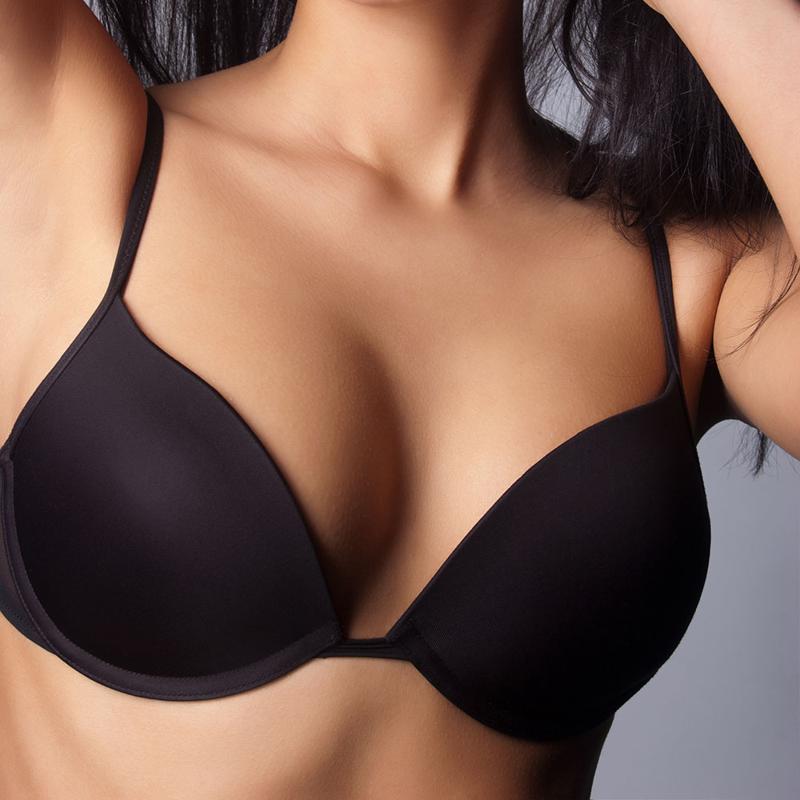
Hypomastia is a condition where the female breasts do not grow to a typical size, shape, or fullness during puberty. This condition can either be present from birth or develop during adolescence due to hormonal imbalances or several other factors. (1) Many women wish to enhance the size and appearance of their breasts to restore a more proportionate appearance and a more balanced figure. Dr. Azra Ashraf can treat hypomastia using our breast augmentation procedure to improve the sculpt of each patient’s chest.
Dr. Ashraf is a double board-certified plastic surgeon at Panache Plastic Surgery dedicated to helping each individual enhance their natural beauty. She has helped thousands of patients achieve their goals using several different procedures, including breast augmentation.
To schedule your personal consultation with Dr. Ashraf, we invite you to submit our online contact form. To schedule a consultation over the phone, we ask that you call the office most convenient for you:
- Newport Beach: (949) 899-6673
- Ontario: (909) 323-1669
Contents
About Hypomastia
Hypomastia is a condition characterized by the appearance of underdeveloped or abnormally small breasts in women. This condition has been linked to several factors, such as congenital conditions, hormonal imbalances during puberty, or even genetics. Hypomastia can affect a singular breast (unilateral occurrence) or both breasts (bilateral occurrence). (2)
While there are different options for treating or managing hypomastia, breast augmentation is the most effective for helping patients achieve breasts they can feel confident about. At Panache Plastic Surgery, we offer both implant-based and fat grafting breast augmentation techniques.
About Breast Augmentation
Breast augmentation is a surgical procedure that enhances the shape, size, and fullness of the breasts using either implants or fat transfer techniques. Breast augmentation can be performed for both cosmetic and reconstructive reasons and is one of the most popular cosmetic surgical procedures in the country. (3)
Breast implants are available in different materials, sizes, and shapes, each with unique benefits. At Panache Plastic Surgery, we offer both saline and silicone breast implants. During your consultation, Dr. Ashraf will help you determine the type and size of implant right for you based on your physique and treatment goals.
Saline Implants
These implants consist of a silicone shell filled with a sterile saline solution. Saline implants are typically placed empty into the chest and then filled after placement. These implants are highly customizable and can be filled to a range of sizes depending on your individual needs and goals.
Silicone Implants
Silicone breast implants are composed of a silicone shell and filled with a silicone gel. These breast implants are designed to mimic the soft feel of natural breast tissue, and visible rippling is less likely to occur for patients with thinner or less breast tissue. (4)
Gummy Bear Implants
Gummy bear implants are a type of silicone implant that is filled with a highly cohesive and more viscous silicone gel. These implants offer enhanced projection while still looking natural, and are designed to maintain their shape.
Benefits
The decision to undergo breast augmentation for treating hypomastia offers numerous benefits, including:
- Increased Breast Size: You can experience a significant improvement in the size, fullness, and symmetry of your breasts, helping you achieve your desired proportions.
- Improved Self-Confidence: Many women report an improvement in their self-esteem and body confidence following their procedure.
- Natural-Looking Results: Dr. Ashraf can provide you with results that appear seamless and proportionate to your natural figure, avoiding the appearance of “stuck-on” breasts.
- Customizable Treatment Options: You can select from various implant materials, shapes, and sizes, ensuring personalized outcomes that align with your aesthetic preferences.
- Long-Lasting Effects: The results of breast augmentation can last for several years, with most implants lasting for up to a decade before replacement is recommended.
- Flexible Clothing Options: You may feel more comfortable wearing clothing styles that you may have previously avoided, especially low-cut or more revealing tops.
Candidates
Ideal candidates for hypomastia treatment include those with underdeveloped or asymmetrical breasts who wish to correct their appearance. Individuals who are dissatisfied with the size, shape, or fullness of their breasts may also make suitable candidates. All potential patients interested in breast augmentation should be in good overall health without any underlying medical conditions that may impact their recovery or results. Realistic expectations should also be held regarding the outcome of their procedure.
Breast augmentation is not recommended for pregnant women or those with a history of autoimmune disease or silicone sensitivity. (4) However, individuals who do not qualify are still encouraged to schedule a personal consultation so that our team may find a suitable alternative. Each potential patient’s candidacy for breast augmentation will be determined during their personal consultation.
Personal Consultation
The first step to correcting your hypomastia is attending a personal consultation at Panache Plastic Surgery. During the consultation, Dr. Ashraf will meet with you and review your medical history, discuss your concerns, and listen to each of your treatment goals. She will also evaluate the appearance and anatomy of your breasts. This will include assessing the condition of your skin, breast tissue, current breast size, and proportions.
Using this information, Dr. Ashraf will help you explore each of your available options and help you determine the best size and type of implants to help you achieve your desired appearance. This consultation also serves as an opportunity to ask any questions you may have about hypomastia or breast augmentation. Dr. Ashraf will use the information gathered throughout the consultation to develop your personalized treatment plan, ensuring you reach your goals.
To schedule your personal consultation, we invite you to submit our online contact form. For any questions or to schedule a consultation over the phone, we ask that you call the office most convenient for you:
- Newport Beach: (949) 899-6673
- Ontario: (909) 323-1669
Preparation
You will receive a set of preparation instructions after your treatment plan has been developed. These instructions will vary between patients but are designed to optimize your results and guarantee a safe procedure. You will need to stop taking blood-thinning medications and supplements to help minimize any complications. The use of nicotine products should be stopped several weeks in advance. You will need to prearrange transportation home from your appointment, and it is strongly recommended to arrange for at-home care for the first 24-48 hours of your recovery. Any prescriptions or medications should also be filled beforehand.
Procedure
Breast augmentation is performed on an outpatient basis and typically takes about 2 hours to perform. Upon your arrival, you will be taken to a private room where your skin will be cleansed and general anesthesia will be administered to help you relax. From there, Dr. Ashraf will begin treating your hypomastia using either breast implants, fat grafting, or a combination of the two. The exact techniques used will be discussed and predetermined during your consultation.
Breast Augmentation with Implants
Dr. Ashraf will begin by placing incisions around the breasts to access the underlying tissue. The placement of the incisions will vary depending on your specific needs and will be determined during your consultation.
Once the incisions have been made, Dr. Ashraf will create a pocket for the implants to rest in. The pockets can be made either beneath the pectoralis muscle or above, also known as submuscular and subglandular, respectively. (4) The implants will be carefully placed within the chest and filled if needed. Once your ideal appearance has been achieved, Dr. Ashraf will close the incisions. You will continue to be monitored by the Panache Plastic Surgery team until you are cleared to return home.
Fat Grafting Augmentation
Fat grafting is a technique that transfers fat from one area of the body to another. Dr. Ashraf will utilize a small suctioning tube called a cannula to harvest viable fat cells from various areas of the body, most often the abdomen, thighs, or flanks. This technique is ideal if you are interested in a more subtle enhancement or want to avoid using breast implants.
Dr. Ashraf will first administer a tumescent fluid to the donor area to help harvest excess fat. This fluid is composed of adrenaline, saline, and a local anesthetic to help minimize bleeding, further numb the treatment area, and swell the fat cells. She will use the cannula to gently remove and suction out the targeted fat before processing the fat for reinjection. The fat can then be administered into the breasts to improve their size and appearance, or to further enhance and mask the appearance of placed implants.
Recovery
Each individual’s recovery timeline will vary depending on their personalized treatment plan and personal response to their procedure. You may experience discomfort or tightness in the treated area, but these effects are temporary. You may be cleared to return to work and other non-strenuous activities after two weeks; however, any physical or high-impact activities should continue to be refrained from until approved by Dr. Ashraf. Any further directions will be discussed with you during your consultation.
Results
The full results of your hypomastia treatment will become more apparent as any residual swelling subsides. You will be able to experience an improvement in the fullness, shape, size, and symmetry of your breasts, as well as a more sculpted and proportionate figure. Many patients also report an enhanced body image and sense of confidence after enhancing the appearance of their chest. The results of breast augmentation can last for several years, but you will need to replace your implants every 10-15 years. (5) This duration, however, may vary, with some patients experiencing implants that last longer.
Cost of Hypomastia Treatments in Newport Beach and Ontario, CA
The cost of your hypomastia treatment can vary depending on your treatment plan. Pricing will consider the type of implants selected, the surgical techniques utilized, the extent of correction, as well as several other factors, such as facility fees and the cost of anesthesia. Dr. Ashraf will discuss the cost of your breast augmentation with you once she has evaluated the condition of your chest and developed your personalized breast augmentation procedure. Additionally, Panache Plastic Surgery offers several financing options to help you achieve each of your goals.
To learn more about the cost of your customized hypomastia treatment, please schedule a personal consultation by submitting our online contact form. For any questions, our Newport Beach office can be reached at (949) 899-6673, and our Ontario office can be reached at (909) 323-1669.
FAQ
What is hypomastia?
Hypomastia is a medical term used to describe underdeveloped breast tissue in women.
Will I be able to breastfeed after my breast augmentation?
Most women can breastfeed after undergoing breast augmentation; however, any concerns should be discussed with Dr. Ashraf during your consultation.
How long will my breast implants last?
Many breast implants can last for up to a decade, but it is recommended to have regular appointments to monitor their condition.
Is breast augmentation a safe procedure to undergo?
When performed by a double board-certified plastic surgeon like Dr. Ashraf, breast augmentation is a very safe procedure to undergo. She will discuss any risks with you beforehand to ensure you feel well-informed and comfortable regarding your procedure.
Can breast augmentation address asymmetry?
Yes, breast augmentation can correct asymmetrical breasts. Dr. Ashraf can adjust the size of the implants used on each side to ensure even results.
References
- Mareti E, Vatopoulou A, Spyropoulou GA, et al. Breast Disorders in Adolescence: A Review of the Literature. Breast Care. 2020;16(2):149-155. doi:https://doi.org/10.1159/000511924
- Winocour S, Lemaine V. Hypoplastic Breast Anomalies in the Female Adolescent Breast. Seminars in Plastic Surgery. 2013;27(01):042-048. doi:https://doi.org/10.1055/s-0033-1343996
- American Society of Plastic Surgeons. 2024 Plastic Surgery Statistics. American Society of Plastic Surgeons. Published June 2025. Accessed July 21, 2025. https://www.plasticsurgery.org/documents/news/statistics/2024/plastic-surgery-statistics-report-2024.pdf
- Fardo D, Sequeira Campos M, Pensler JM. Breast Augmentation. PubMed. Published 2021. https://www.ncbi.nlm.nih.gov/books/NBK482206/
- Patel BC, Wong CS, Wright T, Schaffner AD. Breast Implants. PubMed. Published 2021. https://www.ncbi.nlm.nih.gov/books/NBK441998/